
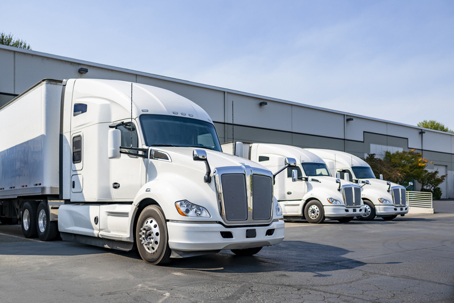
Commercial trucking companies are held to strict safety standards because of the size and danger of the vehicles they operate. When a large truck is involved in a collision, one of the most important legal questions is whether the trucking company did everything required to ensure the driver was qualified, safe, and properly vetted before being allowed on the road. If they failed to do so, that failure can become a central issue in a personal injury claim.
Understanding what evidence can prove negligent hiring or supervision is critical in building a strong case after a serious trucking crash.
Driver Qualification Files and Hiring Records
One of the most important pieces of evidence in a trucking case is the driver qualification file. Federal regulations require trucking companies to maintain detailed records for each driver they hire. These files typically include employment applications, driving history checks, prior employer verification, and records of past violations.
If a company failed to properly review or maintain these files, it may indicate that the driver was not adequately screened before being placed behind the wheel of a commercial vehicle. Missing or incomplete documentation can be a major red flag.
Employment applications can also reveal inconsistencies. If a driver failed to disclose prior accidents, suspensions, or terminations, and the company did not verify this information, it may show that proper vetting procedures were not followed.
Motor Vehicle Records and Safety History
Motor vehicle records are another key piece of evidence. These records show a driver’s history of traffic violations, license suspensions, DUIs, and prior accidents. Trucking companies are expected to review these records before hiring a driver and periodically thereafter.
If a driver had a documented history of reckless driving or serious violations and was still hired or retained, that can support a claim that the company ignored safety risks.
In some cases, patterns of violations may show that the driver was not qualified to operate a commercial truck in the first place.
Drug and Alcohol Testing Compliance
Federal regulations require trucking companies to conduct drug and alcohol testing during the hiring process and at various points during employment. This includes pre-employment screening and participation in federal testing programs.
Evidence showing that a company failed to conduct required testing, ignored failed tests, or failed to place a driver in the federal clearinghouse after a violation can be critical.
Drug and alcohol testing records can reveal whether a company followed safety protocols or allowed a driver with substance-related issues to continue operating a commercial vehicle.
FMCSA Clearinghouse and Regulatory Violations
The FMCSA Clearinghouse is a federal database that tracks drug and alcohol violations for commercial drivers. Employers are required to check this system before hiring a driver and report certain violations.
If a trucking company failed to check the Clearinghouse or ignored information contained within it, that failure may demonstrate negligence in the hiring process.
Additionally, violations of FMCSA regulations, including hours-of-service rules or maintenance requirements, can further support claims that the company did not take safety seriously.
Internal Communications and Hiring Policies
Internal emails, hiring manuals, and training documents can also help prove negligent hiring practices. These materials may show whether the company had proper safety policies in place and whether those policies were actually followed.
For example, pressure to hire drivers quickly due to staffing shortages may lead to shortcuts in background checks or training procedures. Communications between dispatchers, managers, or safety officers can sometimes reveal whether safety concerns were overlooked.
Evidence Preservation After a Crash
After a serious trucking accident, evidence can be lost or destroyed if not preserved quickly. This includes electronic logging device data, dashcam footage, maintenance records, and driver communication logs.
Trucking companies often have access to critical evidence immediately after a crash, which is why early legal action is important. Preserving this information can help determine whether the company properly vetted the driver or ignored warning signs.
Truck Accident Lawyer in Indiana
Proving that a trucking company failed to properly vet its drivers requires a detailed review of hiring records, safety compliance documents, federal databases, and internal company practices. When these records show missing information, ignored violations, or inadequate screening procedures, they can form the foundation of a strong legal claim.
If you or a loved one has been injured in a trucking collision, legal guidance can help uncover the evidence needed to determine whether negligent hiring played a role.
Contact Alvarez Law Offices today to discuss your case and learn what legal options may be available. Call (219) 300-5204 to get started.